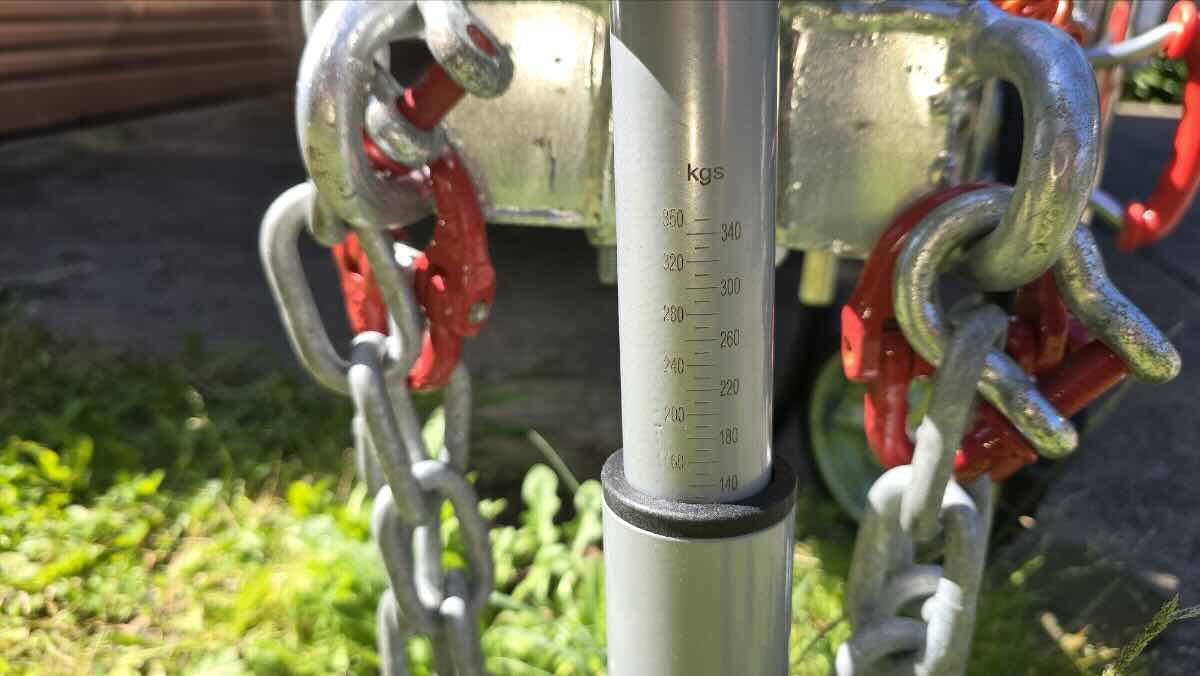
I’m using my own caravan and tow vehicle stats for this document.
Caravan: Fantast Mystic 12f.
Tow Vehicle: Hyundai Santa Fe with enhanced tow bar.
1. Executive Summary: Your Scenario
Based on the figures provided, your setup is currently Safe and Legal, but there is a critical nuance regarding which “Maximum” applies to you.
| Component | Limit / Weight | Status |
| Car’s Tow Ball Limit | 200 kg | High Capacity |
| Caravan’s Plated TBM Limit | 150 kg | The Limiting Factor |
| Actual Tow Ball Weight | 125 kg | PASS |
The Critical Takeaway
While your car can handle 200 kg, your caravan (or its coupling) is rated for a maximum of 150 kg. Your legal limit is always the lower of the two figures. Therefore, your absolute ceiling is 150 kg. You have a 25 kg safety buffer, not a 75 kg buffer.
2. Why the Limit Matters: The Physics of Towing
Even though your car is strong enough to hold 200 kg, adhering to the 150 kg limit of the caravan is vital for mechanical safety.
A. Component Failure Risk
The manufacturer of your caravan chassis or coupling (the hitch) has certified that metal to withstand 150 kg of downward force.
-
The Risk: If you were to load the caravan up to 180 kg (thinking it is fine because the car takes 200 kg), you risk catastrophic failure of the A-frame or the coupling snapping under stress, particularly when hitting potholes or bumps at speed.
B. The “See-Saw” Effect
Excessive weight on the tow ball acts like a lever on your car.
-
Rear Sag: Pushes the rear suspension down, potentially hitting bump stops.
-
Front Lift: Lifts the front wheels, reducing traction.
-
Consequence: This results in vague steering (floating), reduced braking efficiency (front wheels skidding), and misaligned headlights blinding oncoming traffic.
3. Managing the 25 kg Buffer
You are currently sitting at approximately 125 kg. This is a good, stable weight. However, because your effective limit is 150 kg, you have a buffer of only 25 kg.
It is surprisingly easy to “eat up” that 25 kg buffer without realizing it:
-
Gas Bottles: If your 125 kg measurement was taken with empty gas bottles, filling two standard 9kg bottles adds roughly 18–20 kg directly to the A-frame. This would push you to 145 kg—dangerously close to the limit.
-
Jerry Cans: Adding a single 20L Jerry Can of water or fuel to the front holder adds 20 kg.
-
Front Boot Loading: Throwing a heavy tool bag, recovery gear, or wet canvas into the front tunnel boot can easily add 10–15 kg to the ball weight.
Recommendation: Treat 150 kg as a “Do Not Exceed” line. Aim to keep your weight between 120 kg and 140 kg.
4. Stability vs. Overloading
While you must stay under 150 kg, you must also ensure you don’t go too light.
-
The Danger of Being Too Light: If you try to lower the ball weight by moving heavy items to the rear of the caravan to get “further away” from the 150 kg limit, you risk inducing sway (snaking).
-
The Pendulum Effect: Heavy weights at the rear of the caravan act like a pendulum. If the ball weight drops below roughly 100 kg (in your specific case), the caravan may become unstable at highway speeds.
Your current 125 kg is the “Sweet Spot.” It provides enough weight for stability without overloading the coupling.
5. Legal and Insurance Implications
Roadworthiness
In a roadside check, authorities look at the compliance plates on both the vehicle and the caravan.
-
If your ball weight is 160 kg, you are legal according to the car (200 kg limit) but illegal according to the caravan (150 kg limit).
-
The authorities enforce the lowest rating. You could be fined and grounded.
Insurance
In the event of an accident, an assessor will check these ratings. If you are found to be operating at 160 kg (exceeding the caravan’s 150 kg plate), the insurance company may deny your claim on the grounds that the vehicle/trailer combination was unroadworthy and operated outside manufacturer specifications.
Summary Checklist
-
-
Know Your True Limit: Your Maximum TBM is 150 kg (determined by the caravan), NOT 200 kg.
-
Current Status: At 125 kg, you are safe and legal.
-
Packing Caution: Be very careful when adding weight to the A-frame (gas, water, toolboxes). You only have 25 kg of “wiggle room.”
-
Distribution: Keep heavy items near the axle to maintain that 125 kg sweet spot.
-